
06/05/2026
Tags: Service
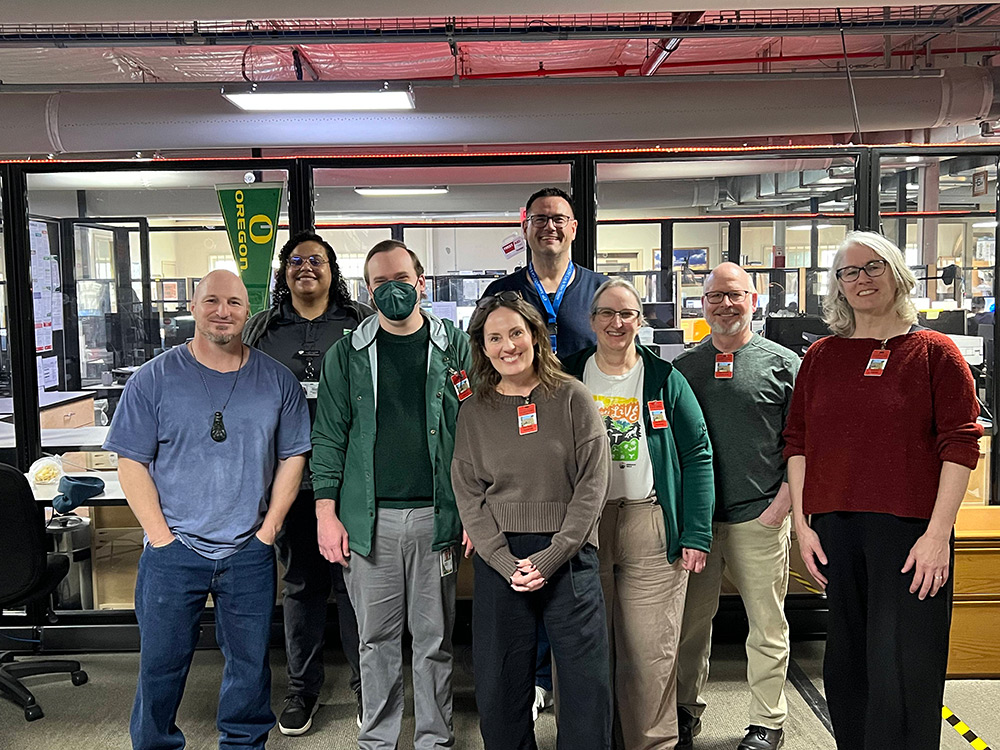
Friday, March 20, 2026, the OCE Braille Center at OSP welcomed several regional braille professionals who visited to learn more about the program and to meet its participants. Attendees included representatives from the Columbia Regional Program, Scott Wall and Kate Dilworth, and representatives from the Northwest Regional Program, Micheal Cantino, Margaret Bertucci, and Sara Wright.
Program participants Joseph (Joey) Bernard and Mitchell Tandeske delivered a presentation to visitors and staff, providing an overview of the program's history, its expansion since inception, notable participant accomplishments, and long-term goals. They highlighted the program's process excellence, high-quality results, and strong commitment to serving the community, underscoring its value as a professional partner.
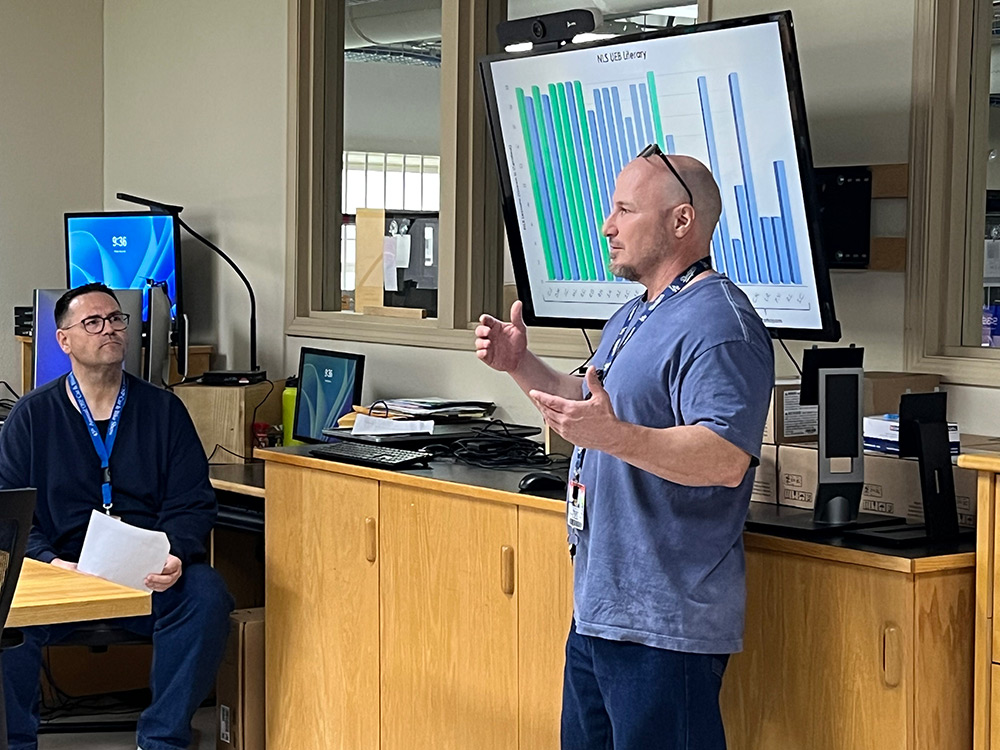 A key highlight of the presentation was the significant progress made by the 27 participants since the first Braille Center opened on July 1, 2024. Six participants have already earned Library of Congress, National Library Service for the Blind and Print Disabled certification as Literary Braille Transcribers, all on their first manuscript attempt, with an average score of 91.5%. An additional ten participants are expected to achieve certification within the next 45–60 days. Importantly, all manuscripts are completed entirely on a braille writer, without the use of translation software.
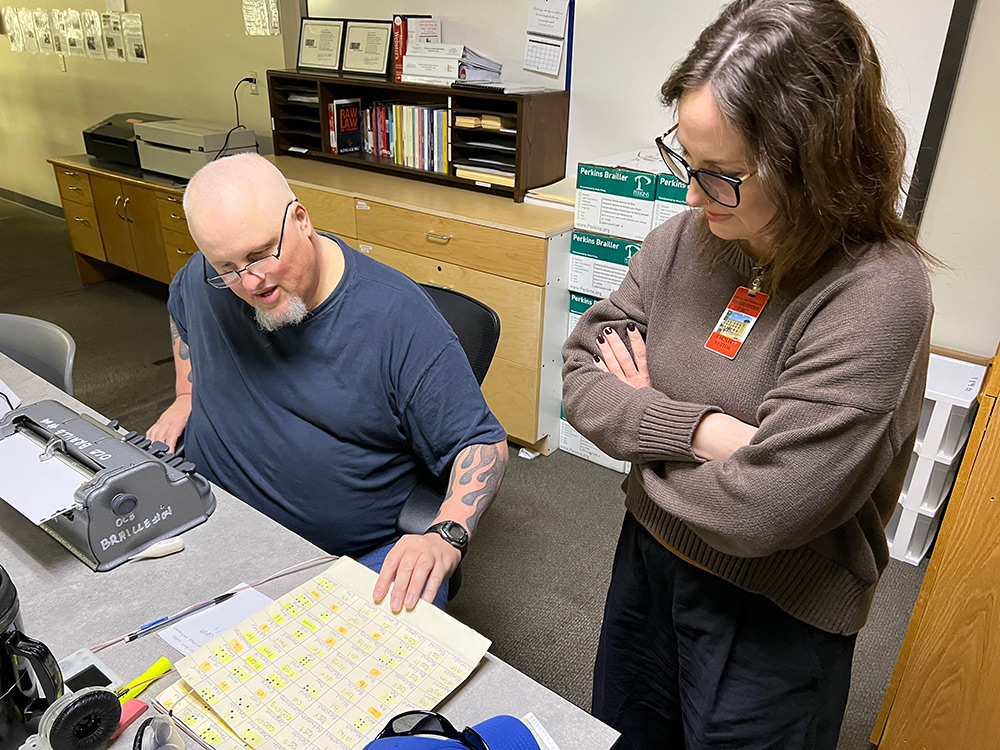
 Another major focus of the presentation was the rehabilitative value of the program. In addition to preparing highly skilled, industry -ready braille transcribers, the Braille Center is dedicated to providing purpose, focus, and opportunity to participants. The newly launched “Braille Connections" initiative was introduced, which pairs participants with experienced braille professionals who also learned braille while in custody and have since achieved personal and professional success. Early results show this initiative offers powerful mentorship, builds confidence, and provides real-world- insight into braille career pathways.
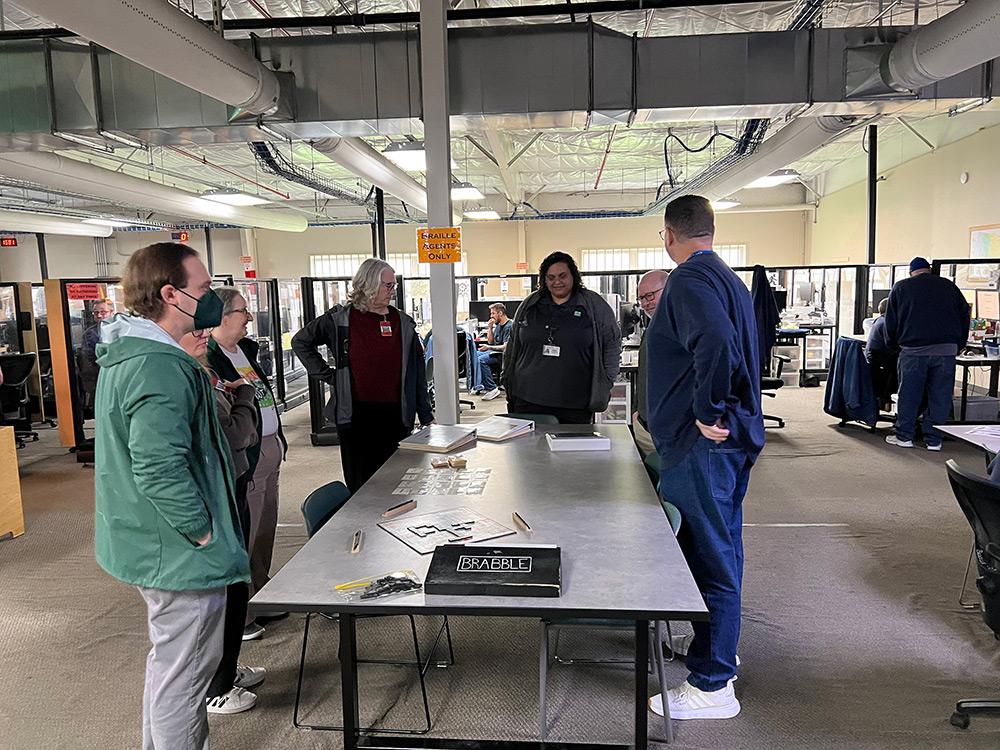
 Following the presentation, visitors participated in an interactive tour of the work area and met many of the participants. They offered enthusiastic praise for the program's accomplishments and expressed strong interest in future collaboration. Several noted their intention to share information widely within the braille community and indicated plans to return with groups of colleagues.
In support of this ongoing development and expansion, it is important to note that the program is funded through the Department of Corrections by a federal Bureau of Justice Assistance grant. This funding helps ensure the continued growth, stability, and impact of the Braille Center's work within the community.
As the program works toward the long-term goal of becoming financially self-sustaining, continued engagement from regional braille partners will remain essential. Their support and advocacy play a critical role in the program's ongoing and future success.
Posts by Category
Monthly Archive